
A decorative painter, a building painter, or an interior designer ?
Not always easy to choose the right professional when you want to transform your interior decoration. Between decorative painter, decorator, building painter, and interior designer, the professions seem similar. Yet their skills differ while complementing each other.
Having spent more than 15 years on construction sites as an interior architect before venturing into decorative painting, I offer to decipher for you the missions of each in order to guide you in your choice.
1. Interior decorator : responsible for the overall design
They focus primarily on the aesthetics and visual appeal of a space. They select furniture, artwork, fabrics, and finishes to create a cohesive look.
They generally intervenes before the work of the building painter and the decorative painter.
Their advice is precious for:
- Give a fresh look at your interior;
- Optimize your space without any heavy works;
- Get best matches for colors, patterns, materials and textiles and furniture
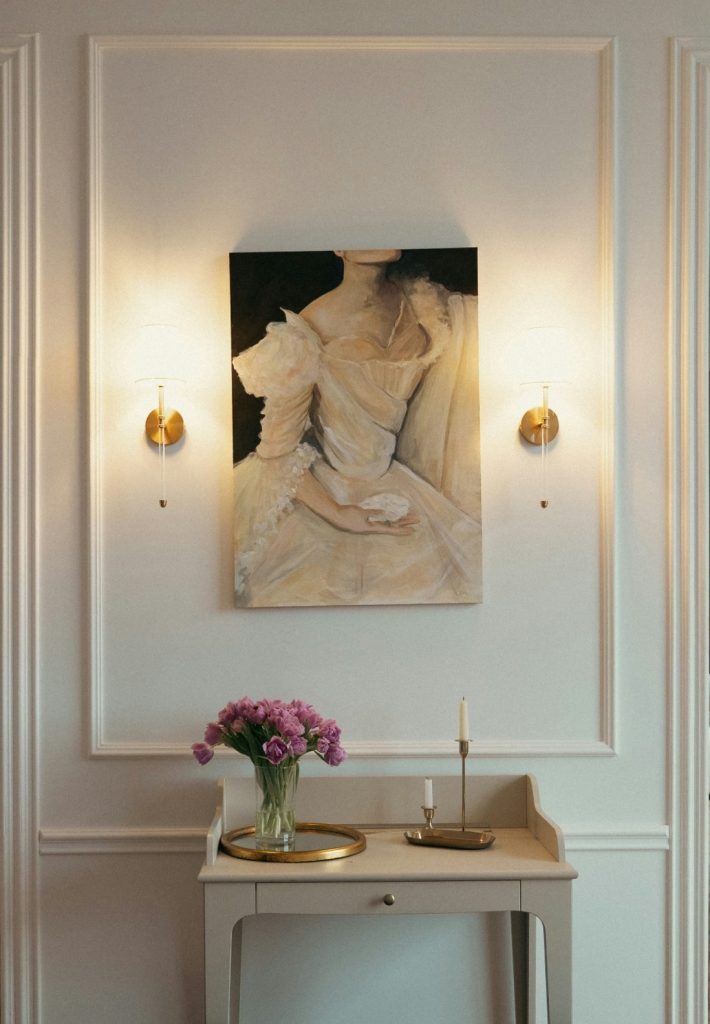

2. House painter: an expert in technical application
They play a crucial role in the progress of your project. Skilled in applying paint, stain, varnish, and other finishes to the interiors and exteriors of residential buildings, they are trained not only in painting techniques but also in surface preparation, colour selection, and material application.
They often intervene before the decorative painter so that the latter can focus on creating the decor.
Their advice are precious for:
- For bringing surfaces into compliance and protecting them
- Selecting the correct paints and finishes based on a room’s function
3. Decorative painter : a goldsmith of painting techniques
Craftman and artist, a decorative painter is a specialized artist who focuses on the enhancement and beautification of surfaces through intricate and decorative painting techniques. This vocation blends artistic creativity with technical precision to produce visually compelling designs that can transform mundane spaces into works of art. Ornamental painters are often well-versed in a variety of traditional and contemporary styles, ranging from classical architectural elements like frescoes and trompe-l’œil to more modern and abstract motifs. Their expertise lies not only in their ability to execute complex patterns but also in their understanding of color theory, spatial dynamics, and historical design elements.

In Short
- Each professional plays a very specific role: conceptual, technical, or creative.
- The choice of the right expert depends mainly on the level of uniqueness sought and the expected artistic degree.
- Decorative painters are the right people to talk to if you are looking for unique decoration or exceptional finishes.